Struggling with Digital Marketing for your Tourism Business?
Landing Pages for Tourism Ads: Why Your Website Homepage Is Not Always Enough
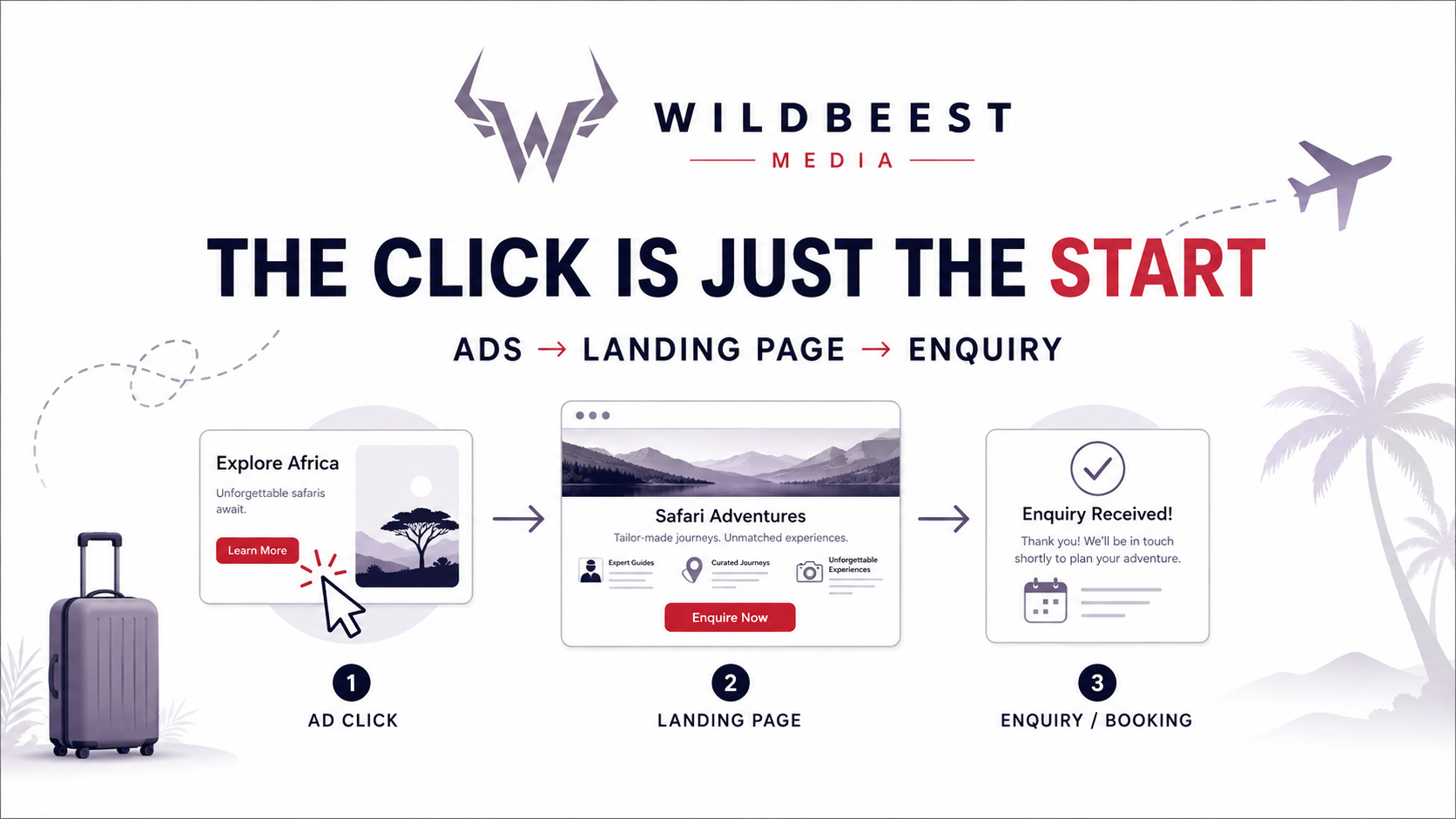
Landing pages for tourism ads are often more effective than sending paid traffic to a general homepage because they keep the traveller focused on the exact offer they clicked to see. A strong
tourism digital marketing strategy connects
paid ads for tourism with focused
tourism landing pages that answer the right questions and lead towards a clear enquiry.
Key Takeaways
- Your homepage and your campaign landing pages have different jobs.
- Paid traffic should normally arrive on a page that closely matches the advert.
- Tourism landing pages help remove distractions and keep travellers focused on the offer.
- Better landing pages can improve tourism lead generation without increasing ad spend.
- The page should answer the questions a traveller needs resolved before enquiring.
- Different offers and audiences may need different landing pages.
- Campaign performance should be measured by qualified enquiries and bookings, not clicks alone.
What Is a Tourism Landing Page?
A tourism landing page is a focused webpage built around a specific campaign, audience, travel product or conversion objective. Unlike your homepage, it does not need to explain everything your tourism business offers.
A landing page might promote a safari package, seasonal lodge offer, photographic tour, honeymoon itinerary, family holiday, specific departure, destination programme or downloadable travel guide. Its role is to continue the conversation started by the advert.
If somebody clicks an advert for a seven-night private family safari, they should arrive on a page explaining that safari. They should not need to land on the homepage, search through the menu and work out which itinerary appeared in the advert.
That extra work creates friction, and friction can cost enquiries.
Why Sending Ad Traffic to Your Homepage Can Waste Budget
Your homepage remains one of the most important pages on your website. It introduces your business, products, destinations and overall brand.
The problem is that a homepage usually has to serve many different visitors.
A lodge website may promote accommodation, activities, dining, weddings, specials and destination information. A tour operator may offer several countries, travel styles and itineraries. This is useful for general browsing, but it is not always the best experience for somebody who clicked an advert about one particular offer.
Consider an advert promoting a private Greater Kruger family safari. If the traveller clicks and arrives on a homepage promoting romantic stays, bush dining, accommodation categories and several unrelated experiences, the connection between the advert and the page has been weakened.
This is where landing pages become valuable. They allow the campaign to focus on one product and one audience without asking the traveller to navigate the rest of the website first.
It does not mean every advert must use a separate landing page. A branded Google search, for example, may be perfectly suited to your homepage. The important question is whether the page you are sending people to matches the reason they clicked.
How Landing Pages Match Specific Travel Offers
Tourism purchases are specific. Travellers are rarely searching simply for "a holiday".
They may want a family safari, photographic tour, walking safari, honeymoon, short regional getaway, small-group departure or multi-generational itinerary. Each audience has different questions, budgets, concerns and reasons for travelling.
A good tourism conversion strategy reflects those differences.
A family safari campaign may need to address children's ages, accommodation configuration, private vehicles, transfers and family-friendly activities. A walking safari campaign may need to explain fitness requirements, guide experience, group size, terrain and daily walking distances.
Trying to answer both audiences through the same generic page weakens the message.
The same applies to search intent. Someone searching for "private South Africa family safari" has already told you considerably more about what they want than somebody searching broadly for "South Africa safari".
Your advert and landing page should use that information.
This is also where tourism SEO and paid search overlap. Both work best when the page closely answers the searcher's actual intent rather than sending everybody towards the same generic content.
What a Tourism Landing Page Should Include
There is no single template that every tourism business should use. A local two-night getaway and a high-value international safari require different levels of detail.
However, a strong tourism landing page should usually include the following.
A Clear Offer
The visitor should immediately understand what is being offered, where it takes place and who it is designed for.
Avoid opening with vague destination language when the traveller clicked because of a specific product.
Practical Travel Information
Tourism purchases involve logistics. Give people enough information to determine whether the product is relevant before asking them to enquire.
Depending on the campaign, this could include:
- Dates and duration
- Destination
- Accommodation
- Activities
- Transfers
- Meals
- Group size
- Pricing
- Minimum stays
- Inclusions and exclusions
- Availability conditions
Withholding basic information does not necessarily create more enquiries. It can simply create more poor-quality enquiries.
A Clear Reason to Choose the Offer
Travellers are usually comparing alternatives.
Explain what genuinely differentiates the product. That may be specialist guiding, private access, small groups, a particular location, conservation involvement, flexible itineraries, direct lodge ownership or a combination of experiences that is difficult to find elsewhere.
Specifics are more persuasive than phrases such as "unforgettable experience" or "trip of a lifetime".
Relevant Images and Video
Tourism is visual, but the imagery should support the campaign being advertised.
A photographic safari page should show the photographic experience. A family safari campaign should demonstrate how families actually experience the product. The imagery needs to reinforce the offer rather than simply make the page attractive.
Answers to Common Questions
Travellers often hesitate because something remains unclear.
They may want to know whether children can join, which airport to use, how transfers work, whether equipment is provided, what fitness level is required or what happens after they enquire.
Answering these questions before the enquiry helps reduce uncertainty and improves lead quality.
Trust
Premium tourism is a considered purchase. Potential guests want evidence that the company they are considering is credible.
Relevant trust signals can include real guest reviews, guide experience, destination knowledge, industry memberships, media coverage, conservation partnerships and clear information about the people behind the business.
One Clear Next Step
The landing page should have a defined conversion objective.
Depending on the campaign, this might be:
- Check Availability
- Request an Itinerary
- Plan Your Safari
- Request a Proposal
- Speak to a Travel Specialist
- Download the Guide
The visitor should not have to work out what you want them to do next.
How Landing Pages Improve Enquiry Quality
Good tourism lead generation is not simply about generating more forms.
It is about attracting people who understand the offer and are genuinely suitable for it.
A business may receive 100 enquiries from an advertising campaign and still have poor results if most leads have the wrong budget, dates or expectations. Those leads still require sales time to answer and qualify.
A focused landing page does part of that qualification before somebody contacts you.
If a page clearly explains the dates, pricing, group size, destination, experience and requirements, the person who completes the enquiry form already understands much more about the product.
That can result in fewer irrelevant enquiries and more useful conversations.
It can also make advertising spend work harder.
If 1,000 visitors generate 20 enquiries, the landing page is converting at 2%. If the same amount of traffic produces 50 enquiries after improving the campaign and landing-page experience, you have generated 2.5 times as many enquiries without buying additional traffic.
That is why paid ads for tourism should never be evaluated purely by clicks or cost per click.
What happens after the click matters just as much.
Your Homepage and Landing Pages Have Different Jobs
Your main website remains the centre of your digital presence. It supports organic search, destination research, brand discovery, product exploration, trust and direct enquiries. Landing pages support specific campaigns.
The homepage answers the broader question: Who are you and what do you offer?
A landing page answers a more immediate one: Tell me more about the thing I just clicked.
Both have a place in a strong tourism website and marketing strategy.
Landing Pages Should Follow the Traveller's Buying Journey
Tourism businesses often structure their websites according to how the company itself is organised: accommodation, activities, destinations, about and contact. Travellers are thinking differently.
They want to know whether the experience suits them, how much it costs, when they can travel, how they get there, what is included and why they should choose one company over another. A landing page should be built around those buying questions.
This is also why simply building an attractive page is not enough. The landing page needs to match the audience, offer, advert, search intent and next step in the sales journey.
How WildBeest Media Builds Tourism Landing Pages
WildBeest Media works specifically with tourism businesses, so landing pages are approached as part of the wider campaign rather than as isolated website design work.
Before building the page, we look at the commercial objective, target audience, product, traveller intent, campaign messaging, traffic source, likely objections, enquiry process and tracking requirements.
The landing page can then work alongside the channels required for the campaign, including Google Ads, Meta Ads, SEO, articles, press releases, email marketing, lead magnets and retargeting.
This is the same principle behind our wider approach to tourism marketing campaigns.
The advert should not operate separately from the website. The website should not operate separately from the lead process. The lead process should not operate separately from sales.
The traveller experiences one journey, so the marketing needs to work as one system.
Do Not Pay for a Click and Waste What Happens Next
A successful tourism advertising campaign does not end when somebody clicks.
The landing page needs to continue the message, answer the important questions and make the next step clear.
At WildBeest Media, we connect advertising, landing pages, SEO, content, email and tracking around the same commercial objective.
Want better results from your ad spend? Let us build landing pages designed for tourism enquiries.
Frequently Asked Questions
Do tourism businesses need landing pages?
Not every marketing activity needs a dedicated landing page. They become particularly useful when you are promoting a specific offer, audience, destination or campaign and your normal website page does not closely match that message.
Should paid ads go to a homepage or landing page?
It depends on the purpose of the advert. Broad brand advertising may appropriately lead to a homepage, while ads for a specific package, departure, special or audience will often benefit from a dedicated landing page.
What should be on a tourism landing page?
A tourism landing page should clearly explain the offer, destination, intended traveller, practical details, inclusions, differentiators and next step. Relevant imagery, trust signals, FAQs and a clear enquiry action should support the decision.
Can landing pages improve booking enquiries?
Yes. A well-built landing page can reduce distractions, improve the connection between the advert and website, answer important questions and pre-qualify potential customers before they contact the business.
How many landing pages does a tourism business need?
There is no fixed number. Landing pages should be created where there is a meaningful difference in the audience, product, campaign message or conversion objective. Creating multiple near-identical pages simply for volume adds little value.
No obligations - just honest advice to cut through the BS.
Feeling Overwhelmed?
Let's Work Together
Downloads
Share The Tips